

Is It Mold or Mildew in My Mini Split? Does the Difference Actually Matter?
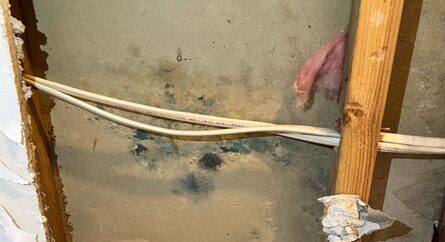
Mildew is a surface-level fungus that is usually easier to clean, while mold is a deeper-growing fungus that can spread into materials and affect air quality. When it comes to a mini split system, the difference matters a lot, because your unit is actively blowing air through your living space every time it runs.
A homeowner near Methuen, MA recently called us after an HVAC cleaning company told them the growth inside a mini split was “just mildew, not mold.” The family wanted a second opinion before letting it go. That kind of skepticism is smart. At Aspen Environmental, we hear this situation regularly, and the honest answer is: you cannot tell the difference between mold and mildew by looking at it alone.
What Is the Actual Difference Between Mold and Mildew?
Both mold and mildew are fungi, but they behave differently and require different responses. Mildew typically grows flat on surfaces, looks powdery or fluffy, and stays on top of whatever it is growing on. Mold tends to be fuzzy or slimy, comes in darker colors like black or green, and can grow into porous materials rather than just sitting on the surface.
In a mini split, either one can grow inside the air handler, on the evaporator coil, or along the drain pan. Both thrive in the damp, dark interior of the unit. The problem is that without testing, no one can tell you which one it is just by looking at it.
Why Can’t You Identify It Visually?
Visual identification is not reliable enough to make a health decision. Even experienced technicians can misidentify fungal growth without proper sampling. Color, texture, and smell give clues, but they are not definitive. Some mold strains look lighter and fluffier than you would expect. Some mildew looks darker.
The only way to confirm what you are dealing with is through lab-tested samples. A swab collected from the affected area and sent to a certified laboratory will tell you the species, the concentration, and whether it poses a health concern. That information is what actually drives the right next step. Learn more about how that process works on our mold testing page.
Why Does a Mini Split Make This Problem Worse?
Mini splits create near-perfect conditions for fungal growth. The evaporator coil gets cold and wet during operation, moisture collects in the drain pan, and the inside of the unit stays dark and humid when the system is off. If the unit is not maintained regularly, that environment becomes a feeding ground.
More importantly, any growth inside a mini split gets distributed directly into your breathing air every time the unit runs. Even mildew, which is generally considered less harmful than mold, can aggravate allergies and respiratory issues when you are inhaling it continuously.
What Should You Do If You Suspect Growth in Your Mini Split?
The right move is to get a sample tested before deciding on a cleaning approach. Here is a simple way to think through it:
If a cleaning company has already been out and claims it is mildew, ask whether they tested it or just looked at it.
If they only looked at it, that is not enough to go on.
Collect a swab sample from the affected area using a sterile container and have it sent to an independent lab.
If testing confirms mold, a proper mold remediation process is needed, not just a surface cleaning.
Skipping the testing step and going straight to cleaning can spread spores further into the unit or into the room. It is worth doing this in the right order.
Frequently Asked Questions
Can I collect a sample myself and have it tested?
Yes, in some cases a homeowner can collect a swab sample using a sterile container and send it to a certified lab. However, a professional can collect the sample more accurately, especially from hard-to-reach areas inside an air handler. We can help with collection and connect you with lab testing so you get results you can actually act on.
If the cleaning company already wiped it down, is it too late to test?
Not necessarily. If the growth was extensive or inside the unit’s coil or drain pan, residual material is often still present. A professional assessment can determine whether a meaningful sample can still be collected. It is always worth asking rather than assuming the window has closed.
Does mildew in a mini split require professional remediation?
If lab results confirm true mildew and the growth is limited to easy-to-access surfaces, a thorough professional cleaning may be sufficient. If the results show mold, or if growth has spread into the unit’s internal components, a more involved remediation process is the appropriate response. Our experienced team can walk you through what the results mean and what your options are.
Not Sure What You Are Dealing With? Let’s Find Out.
If you are in the Methuen, MA area and you are getting conflicting answers about growth in your mini split or anywhere else in your home, do not guess. Get it tested by people who know what they are looking for. Contact us today and we will help you figure out exactly what you are dealing with and what to do next.