

What Is Growing on the Foam Ceiling in My Detached Garage, and How Do I Get Rid of It?
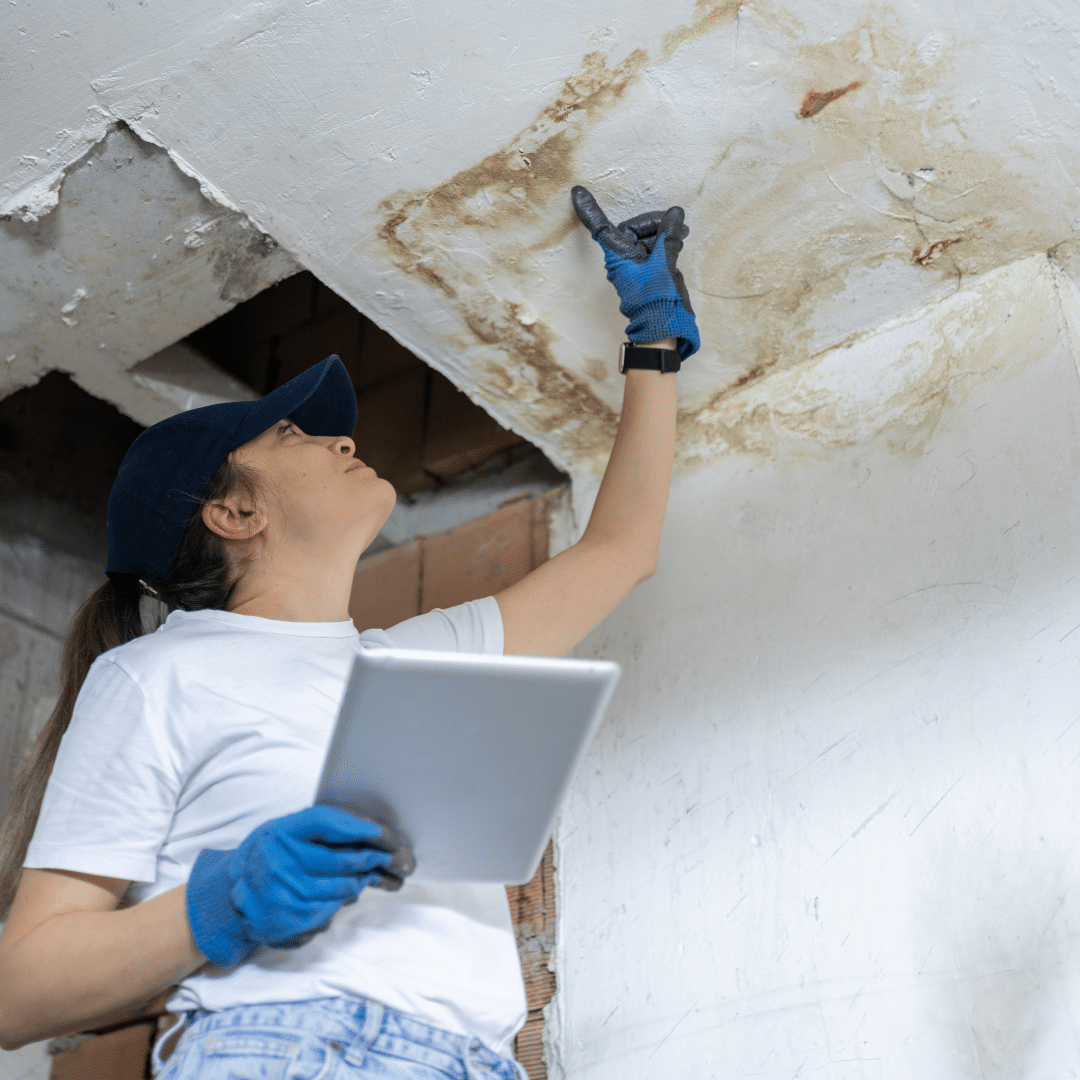
That white or green fuzzy growth on your garage’s foam ceiling is almost certainly mold or mildew, and it needs more than a coat of Kilz to fix. The foam itself is likely saturated with moisture and spores, meaning surface treatment alone won’t solve the problem. In most cases, the foam needs to come out, the structure needs to be treated, and proper ventilation has to be addressed before anything goes back in.
A homeowner near Methuen, MA recently called us after noticing a musty smell coming from the finished room above her detached garage. She eventually traced it down to the garage itself, where she found the foam ceiling covered in white and green growth. Her instinct was to reach for a can of Kilz or bleach spray, but she wasn’t sure if that would be enough. It’s a smart question, and the honest answer is: probably not.
We walk through situations like this all the time. Detached garages with a finished room, apartment, or bonus space above them are some of the most overlooked spots for mold growth in a home. Here’s what you need to know.
What Exactly Is That White and Green Growth on My Foam Insulation?
The white and green growth you’re seeing is most likely mold, and foam insulation is one of its favorite places to hide. Spray foam and rigid foam board are not naturally mold-resistant, despite what many people assume. They don’t absorb water the way wood does, but they trap moisture against surfaces that do, like wood framing, sheathing, and OSB board.
White growth often shows up first and can look almost fluffy or powdery. Green, black, or gray patches tend to follow as the colony matures. The color alone doesn’t tell you exactly which species of mold you’re dealing with, but it does tell you that conditions have been wet enough, long enough, for a colony to establish and spread.
If the ceiling of your garage sits beneath a heated living space, warm air from the room above is constantly pushing down into that cold, often unconditioned zone. That temperature difference creates condensation, and condensation feeds mold. This is a very common setup we see in older New England homes, especially where a room was finished over a garage that was never designed to be heated.
Will Kilz or Bleach Spray Actually Kill Mold on Foam?
Kilz and bleach-based sprays are surface treatments, and mold is rarely just a surface problem. These products can kill visible spores on top of the foam, but they don’t penetrate deeply enough to address the root of the colony. If moisture is still present, mold will return, often within weeks.
There’s another issue with foam specifically. Bleach is water-based, and applying it to foam insulation that is already holding moisture can make the underlying moisture problem worse. It can also cause foam to break down over time, which defeats the purpose of having insulation at all.
We’re not saying these products have no place in the process. But they’re not a standalone fix, and they should never be the only step you take.
Does the Foam Insulation Have to Come Out?
In most cases where mold has visibly colonized foam insulation, yes, the foam needs to be removed. Once mold has grown into and behind the foam, you cannot remediate it without pulling the material out. You simply cannot treat what you cannot reach.
Here’s what we typically find when we remove foam from a garage ceiling like this:
- The wood framing or sheathing behind the foam is also moldy or water-stained
- There is active moisture intrusion from a gap, leak, or condensation point nearby
- The foam was installed without a proper vapor barrier, which is extremely common in garages and outbuildings
- There is no meaningful ventilation in the space, so humid air has had nowhere to go
Pulling the foam out lets us inspect all of this, treat the structure properly, and make sure the problem doesn’t come back after new insulation goes in. Our mold remediation process always starts with finding and addressing the source, not just cleaning up what’s visible.
What Does the Remediation Process Actually Look Like for a Garage Like This?
A proper garage ceiling mold remediation follows a clear sequence: remove the affected material, treat the structure, address the moisture source, and restore with the right materials. Skipping any of those steps is how you end up with mold coming back in the same spot six months later.
Here’s a general breakdown of what the process looks like:
- Inspection: We assess the extent of the growth, look for the moisture source, and check whether the mold has spread to adjacent framing or into the finished room above.
- Containment: For larger jobs, we contain the area to prevent spores from spreading during removal.
- Material removal: The affected foam insulation is removed and properly disposed of. Any compromised wood is also addressed at this stage.
- Treatment: We apply an EPA-registered antimicrobial solution to the exposed framing and sheathing. This is where targeted products like Kilz can sometimes play a secondary role as a sealant after full treatment.
- Moisture control: We identify and correct what allowed moisture to build up in the first place, whether that’s a ventilation gap, a plumbing issue, or a drainage problem around the garage.
- Reinstallation: New insulation goes in only after the structure is fully dry and treated. Often this is a different type of insulation than what was originally there.
If you’re not sure who to trust for this kind of work, take a look at our team’s background and experience before you call anyone. We’ve been doing this work in the region for years and we’ll give you a straight answer, not an upsell.
Can the Mold in My Garage Affect the Room Above It?
Yes, absolutely, and this is one of the most important reasons not to wait on this kind of problem. If there is mold growing on the ceiling of a garage directly beneath a finished room, bedroom, or living space, spores can migrate upward through any gap in the subfloor, around pipes, or through shared framing.
The homeowner who called us noticed a mildew smell in the room above her garage before she ever found the mold below. That’s not a coincidence. Mold spores are microscopic and move easily through air. A musty odor in a room above a garage, crawl space, or basement is always worth investigating.
If you’re smelling something but can’t figure out where it’s coming from, that’s exactly the kind of situation where a free inspection makes sense. We can often identify the source within the first visit. You can learn more about what we do at Aspen Environmental, or reach out directly to get something scheduled.
What Happens If I Just Leave It Alone?
Leaving mold untreated in a detached garage almost always leads to a larger and more expensive problem over time. Mold doesn’t stay in one place. It spreads as long as moisture and organic material are available, and in a wood-framed garage, there is plenty of both.
Here’s what tends to happen when garage ceiling mold is ignored:
- The colony grows larger and deeper into the framing
- Structural wood begins to rot if moisture levels stay high
- Spores continue to migrate into the finished room above
- Remediation costs increase significantly the longer it sits
- Health symptoms like congestion, headaches, or worsening allergies may appear in occupants of the room above
A problem that costs a few hundred to a couple thousand dollars to fix today can become a structural repair project if the rot sets in. We’d much rather help you catch it early.
Frequently Asked Questions
Is the white growth on my garage ceiling foam always mold, or could it be something else?
White growth on foam insulation is most commonly mold or mildew, but it could also be efflorescence if there is concrete or block nearby, or mineral deposits from water intrusion. The greenish color you see developing alongside it points strongly to a biological growth like mold. The only way to know for certain is to have a professional inspect it, and in some cases, collect a sample for testing.
Do I need a mold test before remediation can begin?
Not always. When mold is visually confirmed, most remediation professionals will move forward with removal without requiring a lab test first. Testing becomes more valuable when you can smell mold but can’t see it, or when you need documentation for insurance or a real estate transaction. We can walk you through whether testing makes sense for your specific situation during the free inspection.
How long does garage ceiling mold remediation typically take?
A straightforward job, removing foam, treating framing, and allowing the space to dry, usually takes one to two days depending on the size of the affected area and how far the mold has spread. If there is significant structural damage or a complex moisture source involved, it can take longer. We give homeowners a clear timeline after the initial inspection so there are no surprises.
Will my homeowner’s insurance cover mold remediation in a detached garage?
It depends on your policy and the cause of the mold. If the mold resulted from a sudden, covered event like a burst pipe, insurance may cover some or all of the cost. If it developed gradually due to poor ventilation or deferred maintenance, most standard policies will not cover it. We recommend calling your insurer directly and asking them to clarify your coverage before assuming either way.
Ready to Get Your Garage Inspected in Methuen, MA? Here’s What to Do Next
If you’re in the Methuen, MA area and you’ve found something growing on your garage ceiling, or you’re just smelling something you can’t explain in the room above it, don’t wait it out. These problems don’t resolve on their own, and the earlier we catch them, the easier and less expensive they are to fix.
Aspen Environmental Services offer free inspections, and our technicians will give you an honest assessment of what’s actually going on, not a worst-case pitch to run up the bill. Contact us today to schedule your inspection and get some real answers about what’s growing in your garage.